

Top Graphite Manufacturer Strengthens Industrial Carbon Product Supply
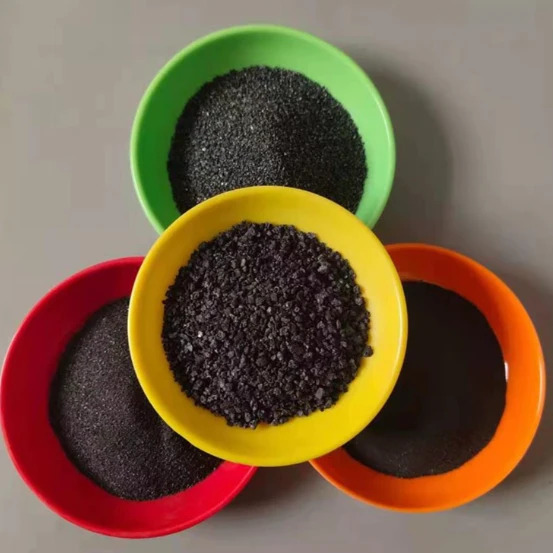
Graphitized Carburizer 3-5mm
HANDAN, HEBEI, CHINA, October 29, 2026 /EINPresswire.com/ --
Hebei Fengchao Import and Export Co., Ltd. is participating in the industrial carbon materials sector with a product portfolio focused on graphite electrodes, carbon additives, and related graphite products. As steelmaking, foundry operations, and other high-temperature industrial processes continue to require dependable carbon materials, buyers increasingly consider production capacity, product specifications, quality management, and supply coordination when evaluating manufacturers. Based in Hebei Province, China, the company presents itself as a professional graphite products manufacturer, with product categories intended to serve a range of industrial applications.
Graphite plays an important role in modern industry because of its electrical conductivity, thermal properties, and suitability for demanding operating conditions. Its uses extend across metallurgical processes, metal production, furnace operations, and specialized industrial applications. Different graphite products, however, serve different functions. Graphite electrodes are primarily associated with electric arc furnace operations, while carburizers and other carbon additives are used to adjust carbon content in molten metal. Understanding these distinctions helps industrial buyers select materials according to their production processes.
Hebei Fengchao Import and Export Co., Ltd. lists Graphite Electrode and Carburizer among its product offerings. These products serve different but related requirements within the broader carbon materials supply chain. The company’s published product information also includes carbon products, graphite crucibles, and graphite blocks. This range gives industrial purchasers several categories to consider when sourcing carbon-based materials for metallurgical and manufacturing operations.
Graphite electrodes are essential consumables in electric arc furnace steelmaking. During operation, electrical current passes through the electrodes to generate an arc that supplies the heat required to melt metallic charge materials. Electrode performance can influence furnace operation, energy use, consumption rates, and production continuity. For this reason, steelmakers generally evaluate electrodes according to technical parameters such as diameter, length, grade, bulk density, electrical resistivity, flexural strength, and suitability for a particular furnace configuration.
The manufacturing of graphite electrodes involves several processing stages. Depending on the product and manufacturing route, these may include preparing and blending carbon raw materials, kneading with a binder, forming, baking, graphitization, and precision machining. Each stage contributes to the final material structure and its operating characteristics. Raw-material consistency and process control are therefore important considerations for manufacturers serving industrial customers.
Hebei Fengchao Import and Export Co., Ltd. states on its website that it has an annual graphite electrode production capacity of 40,000 tons. The company also describes a production site covering approximately 53,800 square meters, with a building area of around 3,800 square meters. These figures are based on the company’s published information and provide a general indication of its stated manufacturing scale. Buyers evaluating potential supply agreements should confirm current capacity, product availability, lead times, and the specifications available for their intended applications.
Graphite electrodes are produced in different grades to meet varying operating requirements. Ordinary-power, high-power, and ultra-high-power electrodes are commonly used in different furnace settings, depending on electrical loading, furnace design, and process conditions. Grade selection should not rely on the label alone. Buyers typically need to compare the supplier’s technical data with the furnace’s operating parameters and the requirements of the steelmaking process. Thread dimensions, electrode nipples, machining accuracy, and connection integrity may also matter when assembling electrode columns.
For procurement teams, dependable electrode supply is connected to more than the product itself. Production schedules can be affected by the availability of compatible electrodes, transport arrangements, packaging, and the time required for technical approval. Buyers may therefore request detailed product specifications, inspection records, packing information, and confirmation of order quantities before entering into a supply arrangement. Clear communication between the manufacturer and the end user can help reduce mismatches between the selected product and the operating environment.
Carburizers represent another important category of carbon materials. In metal production, a carburizer is used to increase or adjust the carbon content of molten iron or steel. The amount required depends on the starting composition, target carbon level, metal temperature, furnace conditions, and the material’s absorption behavior. Carbon additives are available in different forms and compositions, so buyers need to evaluate them according to the metallurgical process in which they will be used.
Hebei Fengchao Import and Export Co., Ltd. lists carburant products in its public catalogue and describes production involving graphitized petroleum coke carbonization agents and electrode-crushing carbonization agents. The company states that its annual production of graphitized petroleum coke carbonization agent reaches 100,000 tons. This is a company-reported figure and should be confirmed directly when evaluating a specific supply requirement. The appropriate product depends on the intended application and the technical specifications agreed between buyer and supplier.
For steelmaking and foundry operations, the performance of a carburizer is influenced by factors such as fixed carbon content, sulfur level, nitrogen content, ash, moisture, volatile matter, particle size, and absorption rate. These characteristics can affect how a carbon additive behaves during melting and refining. The importance of each parameter varies by process and target material. Buyers should therefore establish acceptance criteria before ordering and request a product analysis or certificate of analysis for the relevant batch.
Particle size is another practical consideration. A material that is too coarse or too fine for a particular process may not perform as expected under the plant’s operating conditions. Handling, storage, moisture control, and the timing of addition can also influence results. Rather than assuming that one carbon additive is suitable for every furnace or foundry, production teams should evaluate the material against their process requirements and, where appropriate, conduct controlled trials before making large-scale changes.
The relationship between Graphite Electrode and Carburizer within one supplier’s portfolio may be relevant to customers purchasing several types of carbon materials. Although the two products perform different roles, both can form part of the material supply requirements of metallurgical businesses. A supplier offering multiple carbon product categories may help procurement teams coordinate enquiries and compare specifications through one commercial channel. Technical approval, however, should remain product-specific because electrode performance requirements differ from those applied to carburizers.
Quality management is a central concern in industrial carbon material sourcing. Variations in raw materials, processing conditions, dimensions, or chemical composition can affect how products behave in use. For graphite electrodes, buyers may pay particular attention to physical properties, machining tolerances, thread quality, and dimensional consistency. For carburizers, chemical analysis and particle-size distribution are often key factors. A clearly defined inspection process can help establish whether a delivered batch conforms to the agreed specification.
Hebei Fengchao Import and Export Co., Ltd. states that it monitors production through inspection, testing, and recordkeeping. Its public website also describes quality and safety as part of its service approach and highlights production equipment and product availability. These statements describe the company’s own quality commitments; prospective buyers should request relevant technical documents and confirm the inspection procedures applicable to their orders. Depending on the product, such documentation may include chemical analysis, physical-property data, dimensional inspection records, and batch identification.
Industrial buyers may also need to consider how products are packaged and transported. Graphite electrodes require handling that helps prevent damage to the electrode body, machined ends, and threaded connections. Carbon additives need packaging and storage arrangements appropriate to their particle size, moisture sensitivity, and handling requirements. Buyers should confirm packaging methods, labeling, storage recommendations, and shipment conditions with the supplier before dispatch. These details can be particularly important for international shipments involving long transit times or multiple handling stages.
Supply continuity is another consideration for steel mills, foundries, and distributors. A procurement plan may involve regular replenishment, safety stock, scheduled shipments, or the coordination of several product types. A supplier’s stated production capacity can be one factor in the assessment, but capacity alone does not guarantee that a specific grade or size will be available when required. Buyers should verify current inventory, production schedules, minimum order quantities, and lead times, especially when products are needed to support continuous industrial operations.
Hebei Fengchao Import and Export Co., Ltd. also lists graphite crucibles, graphite blocks, carbon products, electrode paste, and graphite standard and non-standard parts among its broader product range. These products may serve different industrial requirements, from metal melting and carbon applications to specialized graphite components. For customers with varied sourcing needs, the breadth of a product catalogue can provide a starting point for further technical discussions. Each item should still be assessed according to its material composition, dimensions, operating conditions, and intended use.
The company’s location in Handan, Hebei Province, places it within a region with established industrial activity. For international customers, the practical significance of location depends on manufacturing arrangements, transport links, shipping options, and the supplier’s ability to coordinate export documentation. Buyers typically benefit from discussing delivery terms, destination requirements, packaging, payment arrangements, and documentation early in the procurement process. Clear agreements can help both sides establish expectations before production or shipment begins.
As industrial purchasers continue to evaluate carbon material suppliers, the main considerations remain product suitability, technical transparency, supply reliability, and communication. Graphite electrodes need to match furnace requirements, while carburizers must meet the chemical and physical specifications of the intended metallurgical process. Manufacturers that provide clear product information and support specification-based enquiries can help buyers compare available options more effectively.
Against this background, Hebei Fengchao Import and Export Co., Ltd. presents a portfolio covering Graphite Electrode, Carburizer, and related carbon materials. Its website describes graphite electrode production capacity and graphitized petroleum coke carbonization agent output, alongside additional graphite products and processing capabilities. For buyers considering the company as a potential supplier, the next step is to obtain current technical specifications, confirm production and delivery arrangements, and evaluate product documentation against the requirements of the intended application.
About Hebei Fengchao Import and Export Co., Ltd.
Hebei Fengchao Import and Export Co., Ltd. is a China-based manufacturer and exporter of graphite and carbon products located in Handan, Hebei Province. According to its public company information, its product portfolio includes graphite electrodes, carburants, carbon blocks, electrode paste, graphite crucibles, graphite blocks, and graphite components. The company reports an annual graphite electrode production capacity of 40,000 tons and annual production of 100,000 tons of graphitized petroleum coke carbonization agent. These figures are company-reported and should be verified directly for current purchasing requirements.
The company describes its operations as incorporating production equipment, product inspection, testing, and after-sales support. Its product range is intended to serve industrial customers seeking carbon materials for metallurgical and related applications. For steelmakers, foundries, distributors, and other industrial buyers, the company’s website provides further information about its products and contact channels. Product grades, technical specifications, current capacity, pricing, and delivery arrangements should be confirmed with the company before orders are placed.
Website: www.fc-graphite.com
Address: Yigao Intelligent Plaza, Building A, Congtai District, Handan City, Hebei Province, China
Official Website: https://www.fc-graphite.com/
Liu
Hebei Fengchao Import and Export Co., Ltd.
China@fc-graphite.com
Legal Disclaimer:
EIN Presswire provides this news content "as is" without warranty of any kind. We do not accept any responsibility or liability for the accuracy, content, images, videos, licenses, completeness, legality, or reliability of the information contained in this article. If you have any complaints or copyright issues related to this article, kindly contact the author above.
